We recently partnered with the marketing team at a global body care brand—a company that has defined an entire category with its iconic hero product.
When you reach this level of scale, the challenges shift. You aren’t just worried about getting the next order; you are worried about optimizing the purchase journey. Customer segmentation becomes a key part of understanding and optimizing the customer journey, enabling you to identify and target different groups based on their projected profitability and behavior. Their team came to us with a sophisticated set of questions that probe the very health of their business model. They didn’t just want to know “how much did we sell?” They wanted to understand the customer loyalty, including metrics like customer lifetime value (CLV), conversion rate, which are essential for strategic planning and budgeting.
Below are the three specific deep dives they requested, how our data team solved them, and the questions you should be asking of your own data to fuel similar growth.
1: Are your categories talking to each other to create cross selling opportunities?
Most brands simply track repeat purchase rates. But this team wanted to build a brand, not just sell a single product. The customer team drilled down into the specific purchase path during a new product launch. They didn't want a generic number; they wanted to know if the new product was acting as a bridge.
They asked:
“How many customers who bought [the new product], are new to our Body category? This means how many customers are shopping Body for the first time? How many customers from Fragrances converted to Body by buying [the new product]?”
Our solution
To answer this, we analyzed this launch specifically with the following steps:
- Clearly define product categories: First, we aligned on strict definitions of which product types defined Body products versus Fragrance.
- Net New vs. New to Body segments: The team created mutually exclusive definitions to distinguish Net New customers (brand new to the store) from those who were New to Body (existing customers who had never bought Body products before).
- Final result: The analysis confirmed that the new product is indeed a powerful catalyst. We identified a specific, high-value cohort of Fragrance loyalists who used this launch as their bridge to enter the Body category for the very first time.
How to leverage this for growth
This insight transforms the product from a simple SKU into a strategic tool. The marketing team can now create targeted messaging specifically for their Fragrance customers, positioning this item as the perfect entry point into Body Care. This shifts the strategy from generic cross-selling to precision conversion, using the right hook for the right audience. To further incentivize customers to try new categories, consider implementing discount offers and product bundles that encourage larger purchases and cross-category exploration.
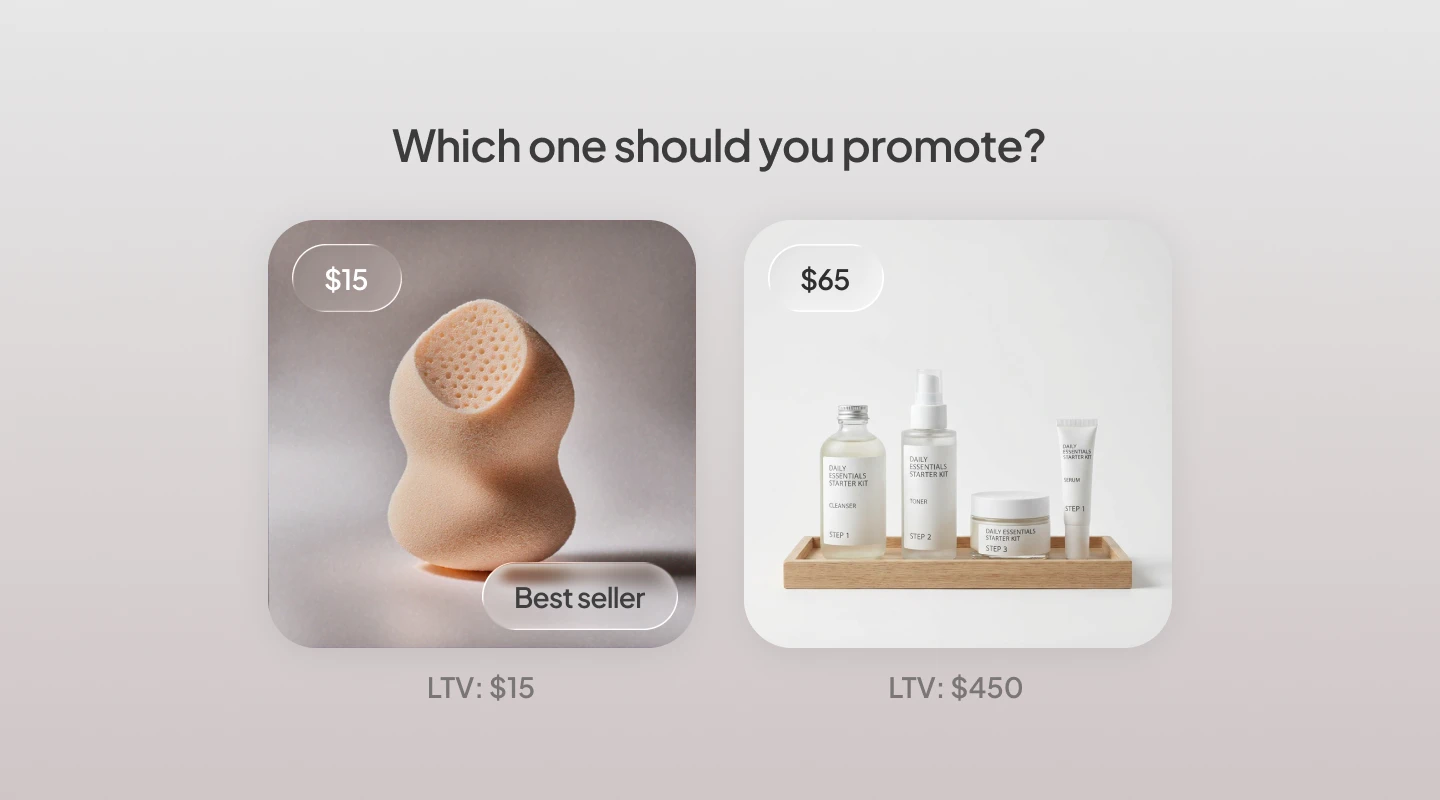
2. Is your entry point setting the customer up for a long relationship and maximizing customer lifetime value?
The team pushed for a view that fundamentally changes how they spend their acquisition budget. They realized that the cheapest customer to acquire isn't always the most valuable.
They asked:
“Our goal is to understand if your first purchase with us is Body vs. Fragrance vs. Hair vs. Sets, what is the customer LTV? We want insight into whether they buy from other categories but want their total LTV including any other category they purchase from.”
Our solution
To solve this, we shifted the analysis from total category spend to a cohort-based view.
- SKU mapping: We utilized a Product type master list to map every single SKU to its corresponding category (Body, Fragrance, Hair…).
- First-purchase attribution: We calculated the total lifetime value of a customer based only on the category of their very first purchase. This creates a clear comparison: does a customer who starts with Hair products eventually become more valuable than one who starts with Fragrance?
How to leverage this for growth
This is the golden ratio of acquisition strategy. If the analysis reveals that customers who enter via sets have a 50% higher 12-month LTV, the growth team can immediately adjust their bidding strategy. They can bid more aggressively for the sets customers, knowing the long-term math works, while pulling back on lower-value entry points.
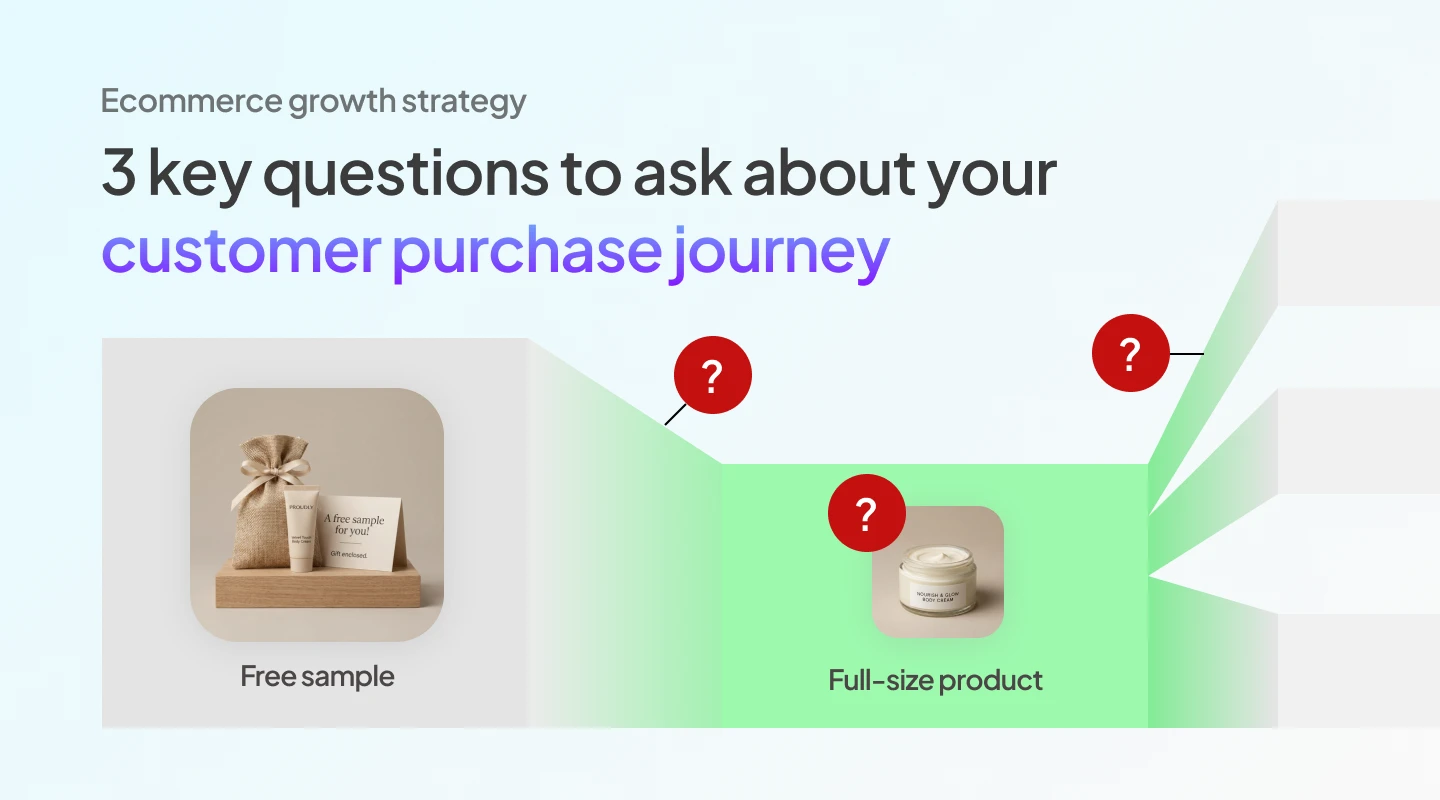
3. Are your free gifts building customer loyalty or just burning margin?
In the beauty industry, the Gift With Purchase (GWP) is standard practice.
But while gifts drive sales today, do they drive loyalty tomorrow?
The team asked the critical question that many founders are afraid to ask:
“What is the impact of gifts: both returning to purchase that product (or a larger size of that product) or to return to purchase something?”
Our solution
To answer this, we distinguished promotional gifts from standard purchases in the orders data.
- Identify gift SKUs: Using product variant data (e.g., 90ml to 240ml), we tracked if a customer who received a mini eventually bought the full-size version.
- Track gift to purchase: By tagging these specific SKUs, we could isolate them in the customer journey. This allowed us to track a user's specific path from receiving a free sample to making a paid order for that same item.
- The any-purchase return: We measured the overall brand retention rate for anyone whose first order included a gift SKU.
The insight
The data confirmed that gifts are a powerful retention driver, not just a conversion tool. The results showed a remarkably strong product adoption curve:
- 36.8% of customers bought a larger size after receiving the gift, proving a direct path from sampling to upselling.
- 46.8% of recipients made a repeat purchase of some kind within the brand ecosystem.
- Bundles were the clear winners: Certain gift sets drove retention rates as high as 85%.
How to leverage this for growth
This analysis allows the brand to move from guessing to scaling. Instead of viewing free items as a margin hit, they can now treat them as high-performance acquisition tools. By identifying the Hero Samples (like the bundles that drive 85% retention), the brand can prioritize those specific gifts in their marketing funnels to ensure every free item distributed is actually building a long-term habit.
The takeaway
Growing brands look for sales. Enterprise leaders look for correlations.
This brand isn't succeeding just because their products are popular. They are succeeding because they are asking the hard questions about how their products interact with each other:
- Are your categories talking to each other to create cross selling opportunities?
- Is your entry point setting the customer up for a long relationship and maximizing customer lifetime value?
- Are your free gifts building customer loyalty or just burning margin?
Authored by

Tresl Data Science Team

George Sylvain

George Sylvain is a San Francisco-based DTC expert and co-founder of Social Print Studio, known for transforming e-commerce strategies into success stories. Visit his insights on AI and Shopify at www.georgesylvain.com.

Sharad Thaper

Alex Greifeld